A feelings chart for adults is a visual list of emotions, often arranged as a wheel, grid or scale, that helps you name exactly what you feel. Naming a feeling precisely, like "disappointed" or "overwhelmed" instead of just "bad," makes it easier to understand what's going on and decide what to do about it.
Below are 15 printable feelings charts for adults, how to use them, journal prompts to go with them, and tips for creating your own.
What Is a Feeling Chart?
While they vary in format, a feelings chart is a wheel, chart, or another graphic that labels different emotions or feelings.
They can help you correctly identify your emotions to better express and manage your feelings.
Feelings charts also expand your emotional vocabulary and help you with better empathy toward others and a more positive self-image.
Why Are Feeling Charts Important?
Feeling charts are essential tools for fostering emotional intelligence and enhancing self-awareness. By articulating and identifying emotions, these charts allow you to better understand their internal states, leading to improved communication and decision-making.
Additionally, they serve as a helpful instrument in mental health care, aiding in the early identification of emotional distress and enabling proactive steps toward good mental health. Feeling charts offer a framework that ultimately fosters healthier relationships.
15 Feelings Charts For Adults That Are Printable
Choose a printable feelings chart for adults that you like, and use it regularly to uncover patterns and address the causes.
Develop coping skills for trying emotions by focusing on what you can control and finding healthy ways to express your feelings.
Keep in mind that while it’s often easier to focus on the negative in life, it’s important to recognize positive emotions as well.
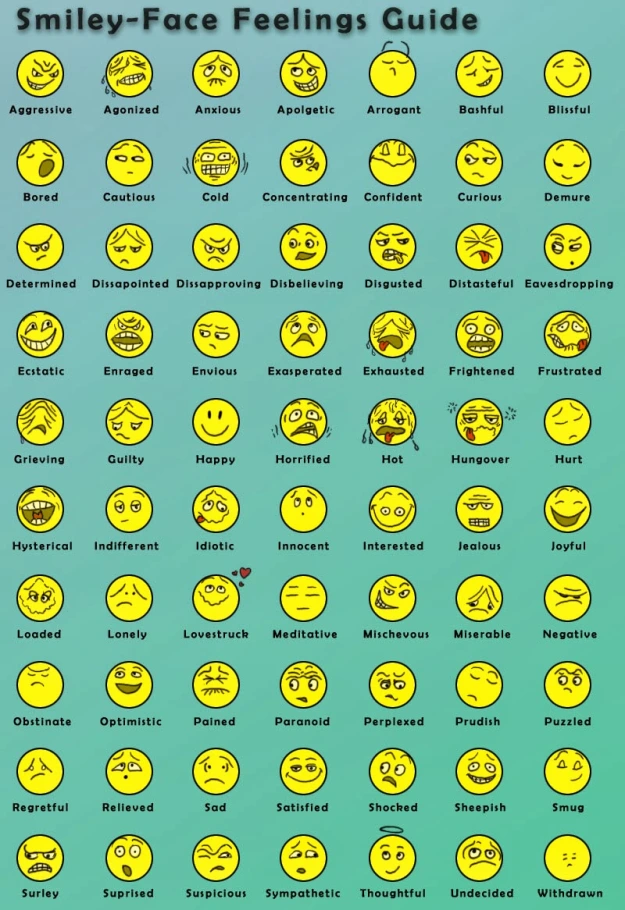
1. Smiley-face Feelings Guide
This alphabetized smiley-face adult feelings chart is a great way to engage in emotional learning and help you identify how you are feeling.
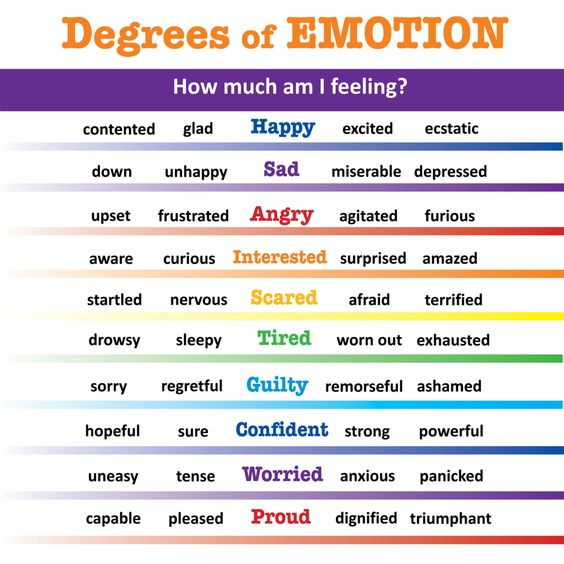
2. Degrees of Emotion
This chart is comprised of ten common emotions and a few of their related feelings of both lesser and greater intensity.
3. Mood Meter
Determine where you are on the mood meter. Reflect on what is causing your feelings, describe them in one or two words, and notice how you express your feelings.

4. The Emotions Wheel
Created by psychologist Robert Plutchik, the emotions wheel consists of eight basic emotions and illustrates how they relate to other emotions.

5. How are you feeling today?
Use this chart to gain a more thorough understanding of your emotions. Identify them and healthily express them to manage them effectively.

6. Emotion-Sensation Wheel
Recognize how emotions manifest as feelings in the body with this emotion-sensation wheel. Identify your core emotions and match them with the physical sensations that frequently accompany the emotions.

7. Emotions and Possible Meanings
Awareness of your emotions is key to understanding and managing them. This chart of emotions covers common emotions and where they may stem from.

8. How to Feel Your Feelings
This feelings-funnel can help you understand what you are feeling and why you are feeling it and how to manage it in the moment.

9. Feeling Words
Your level of satisfaction with your life plays a huge role in your emotions. Notice what you’re feeling and reflect on how that relates to what you need.

10. Primary and Secondary Emotions
Emotions can occur in complex layers. They often consist of secondary emotions that stem from primary emotions. This chart illustrates some common ones.

11. Anger Ladder Chart
Anger can be tricky to navigate. This anger ladder helps you understand the emotion and how it feels in your mind and body.

12. Gifts of Emotional Acceptance
Let your emotions help you rather than hurt you. Accept and listen to your feelings to improve your emotional health.

13. Mental Health Pain Scale
Use this handy scale to gauge your mental health status, identify potential red flags, and consider actions you can take to get through it.

14. Feelings Word List
Some emotions seem to run together, but they can vary greatly in intensity and can carry different meanings. This list is sure to help you describe what you are feeling.

15. Feelings Intensity Chart
Learn even more words to describe your emotions with this comprehensive list of feeling words for adults that are helpfully divided according to mild, moderate, and strong intensity levels.

How Do You Use Feeling Charts?
Although seemingly simple, feelings charts are excellent tools that allow you to sort through your feelings and emotions. They are helpful at all ages and can be used in many different ways.
- With your therapist, counselor, or life coach: Increase your understanding, gain clarity, and feel less stuck.
- In your career as a therapist, counselor, or life coach: Help your clients understand their emotions, gain clarity, and feel less stuck.
- With your kids: Help your children understand and regulate their emotions.
- For personal use: Gain insight into your emotions and feelings to better understand yourself.
- As a writer: Use them to develop characters if you’re writing a novel or play.
How to Create Your Own Feeling Chart
Creating your own feeling chart allows for a personalized emotional exploration tool.
Start by brainstorming a list of emotions that you frequently experience. Consider broad feelings like happiness, anger, or fear but also more nuanced feelings like jealousy, nostalgia, or tranquility. Once you've compiled your feeling list, decide on a chart style that suits your needs – this could be a wheel chart, a grid chart, or even a simple list.
Organize your emotions on the chart, with similar feelings grouped together. Be sure to leave space for adding more emotions as your self-awareness grows.
What Are the 12 Human Emotions?
While the terms are frequently used interchangeably and certainly are related, feelings and emotions are not the same things.
Emotions are your body’s physical response to something. They activate your thoughts, attitudes, and beliefs about the situation and influence how you perceive and interpret it. Your brain then assigns meaning to those emotions to create your feelings.
Your emotions are linked to your brain and are involuntary. They can be positive or negative and can occur to varying degrees.
There’s much controversy around the number of human emotions, with experts believing the number ranges anywhere from 6 to 27 basic emotions. Twelve of the most common emotions are:
- Interest
- Joy
- Surprise
- Sadness
- Anger
- Disgust
- Contempt
- Self-hostility
- Fear
- Shame
- Shyness
- Guilt
What Are the 10 Basic Feelings?
Everyone experiences emotions differently, making feelings highly subjective. They are formed by your personality, beliefs, and past experiences and can vary significantly from person to person.
Unlike emotions, feelings are conscious and can be chosen with awareness and practice.
Some basic feelings include:
- Happy
- Calm
- Safe
- Worried
- Gloomy
- Hopeless
- Uncomfortable
- Stressed
- Vengeful
- Offended
Feelings Wheel vs. Feelings Chart
A feelings chart can be any layout that lists emotions, like a grid, a list or a mood meter. A feelings wheel is a specific type of chart. The popular Feelings Wheel created by Dr. Gloria Willcox places six core feelings in the center (sad, mad, scared, joyful, powerful and peaceful), with more specific feelings radiating outward. Psychologist Robert Plutchik's wheel of emotions is built around eight basic emotions. Both help you move from a vague feeling to a precise word.
Feelings Chart Journal Prompts
Pick a chart, find the word that fits best, and then write about these questions:
- What am I feeling right now, as precisely as I can name it?
- Where do I notice this feeling in my body?
- What happened right before this feeling showed up?
- What is this feeling trying to tell me I need?
- What is one small thing I can do to care for myself right now?
Using a Feelings Chart With Your Partner
Feelings charts aren't just for solo work. Couples can use one during a check-in or after an argument. Each person points to the word that describes how they feel, then shares why. It slows the conversation down and helps you respond to the real emotion, like hurt or fear, instead of the anger on the surface.
Feelings Charts for Adults FAQ
What's the difference between emotions and feelings?
Emotions are your body's automatic reactions to something, like a racing heart when you're afraid. Feelings are how you interpret and experience those emotions in your mind. In everyday conversation, people use the words interchangeably.
Are feelings charts only used in therapy?
No. Therapists use them often, but anyone can use a feelings chart for journaling, daily check-ins, parenting, or improving communication with a partner.
How do I print these feelings charts?
On a computer, right-click a chart and save the image, then print it on standard letter-size paper. On a phone, press and hold the image to save it to your photos before printing.
What are the core emotions on a feelings wheel?
On the Willcox Feelings Wheel, the six core feelings are sad, mad, scared, joyful, powerful and peaceful. Other wheels use different core emotions, such as Plutchik's eight.
Final Thoughts
While there’s no single right or wrong way to experience your emotions and feelings, some methods are more helpful than others.
Start by using these feeling charts to better understand what you’re feeling, then move on to why and how to cope.