19 Of The Most Important Tips Before Dating An Introvert

Couple Talking, Dating An Introvert

Why is it so much easier to connect with some people than others?

When it comes to dating, it’s a rare and beautiful thing to come across someone new and instantly feel a connection.

But after that initial connection, it is important to understand your partner's personality type in order to get involved in a deep and meaningful relationship with that person.

For example, if you are an extrovert, there are a few things that you need to know about dating an introvert.

I'm an introvert myself, and believe me, having an understanding of this personality type can definitely help you out in the long run.

Introversion is a personality trait that describes people who tend to pay more attention to their internal thoughts and feelings than any external stimuli.

While introverts and extroverts are often portrayed as being extreme opposites, the truth is that everyone is on a spectrum, and most people are not on the extreme of one trait or the other.

Introversion is not the same as shyness, contrary to common assumption. It is more about one's focus on internal thoughts.

Carl Jung was a Swiss psychiatrist whose work has also been influential in anthropology, archaeology, religion, literature, and philosophy.

Jung introduced the concept of archetypes which he believed to be tendencies that people are born with that influence their behavior.

According to Jung, an introvert is comfortable with their inner thoughts and feelings, so they view the world in terms of how these thoughts and feelings impact them.

Extroverts feel more comfortable with the world of stimuli, objects, and other people, and are therefore more concerned with their effect on the world.

While introverts may prefer to alone time because this is how they recharge, extroverts get their energy from being around other people.

Jung noted that while few people are completely extroverted or introverted, everyone connects to one attitude a little bit more than the other.

Read More

8 Essential Steps You Must Take To End An Emotional Affair

How do emotional affairs end?

When you've invested yourself in a relationship where you feel seen and valued as you are, how do you fight the temptation to hold onto it? 

Why would you?

If you're reading this, your marriage is the reason.

For all its shortcomings, your marriage is not worth giving up — at least not now.

But you have no illusions.

Ending an emotional affair is one thing.

Recovering from it is another. 

What can you do to repair the damage and ensure you don't make the same mistake?

Read More

Will I Ever Find Love? 15 Ways To Ensure You Do

You see happy couples everywhere you look.

And you can't help thinking, “When will I have that?” or “Will I ever…?” 

No one is doomed to a life without love unless they choose it.

We're guessing you haven't. 

The love you find will likely look different from someone else's, but that doesn't make it less.

Besides, you're not looking for what other people have. 

Read on to learn how to improve your chances of finding exactly what you want.

Read More

185 Would You Rather Questions For Kids

mother and daughter, would you rather questions for kids

If you're looking for a way to keep kids happily occupied, have them play the “would you rather” question game.

Whether the children have just met each other or been friends for years, they will soon be immersed in conversation and laughter.

Would you rather questions can be funny, yucky, or thought-provoking.

Time will fly by as they play during a long trip, sleepover, party, or family reunion.

And better yet, kids will get to know more about each other and themselves while discussing their answers.

Read More

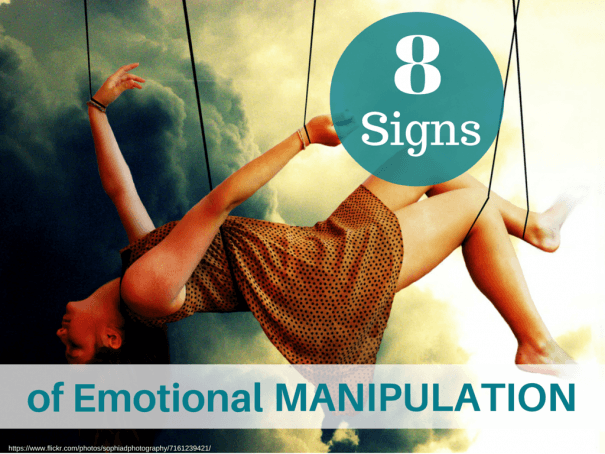
How To Recognize The 8 Signs Of Emotional Manipulation

Emotional Manipulation

Healthy relationships are based on trust, mutual respect, and security.

Not emotional manipulation.

Each person must feel they are valued and loved unconditionally, accepted for who they are, and safe to expose their vulnerabilities and flaws.

This is the ideal foundation for a good relationship, but of course, all of us fall short of this ideal from time to time.

We might use passive-aggressive tactics to express our pain or get our way in a disagreement.

We might tell white lies or throw out hurtful barbs to protect ourselves and cope with our own pain or anger.

Read More