

It's 9:40 on a Tuesday night, and someone has left a wet towel on the bed again. One of you mentions it. The other one sighs. Within about four minutes you're not talking about the towel anymore. You're talking about who does more around here and who forgot the dentist appointment back in March. By 10:15 you're in separate rooms, and either of you could have written the whole thing out in advance.
That's the strange part about having the same fight week after week. Most couples aren't choosing it. They're running an old script, lines and all, without noticing they've picked it up again. Below are nine of the most common ones. For each, you'll see what it looks like at home and one small way to break it.
1. One of you chases and the other one hides.
You want to talk about the credit card bill. Your partner suddenly needs to check something in the garage. You follow them out there, because now you're annoyed about the bill and the garage.
They get quieter. You get louder. Each move makes the other person dig in a little harder.
In a 1990 study, Andrew Christensen and Christopher Heavey at UCLA looked at married couples caught in what they called the demand/withdraw pattern: one partner pushes for change and the other pulls away. They also found that who does the pushing depends partly on whose issue is being discussed. So the "nagger" in your house may trade places with the "avoider" when the topic changes.
This pattern isn't just irritating. A 2014 review led by Paul Schrodt at Texas Christian University pooled 74 studies with more than 14,000 people and found it was linked to lower relationship satisfaction and more personal distress.
If you're the chaser, slow down and name a time: "I don't need to settle this tonight. Can we take 20 minutes Saturday morning?" If you're the one who pulls away, give a return time instead of disappearing: "I'm too wound up to think straight. Give me an hour and I'll come back to this."
2. The fight starts with the harshest sentence in the room.
"You never think about anyone but yourself" is a terrible first line. So is walking in the door and saying, "So I guess we're just not doing dishes anymore." Both set the tone before your partner has even put their keys down.
John Gottman and his colleagues at the University of Washington followed newlywed couples in a 1998 study and looked closely at how their disagreements unfolded. Starting a conflict harshly was one of the patterns that predicted which marriages later ended in divorce. The first few sentences tend to steer everything that comes after them.
Harsh openings usually come from resentment you've been storing up. You've been stewing all afternoon, so by the time you speak, you're on round three in your head while your partner is only hearing round one.
Try opening with what you need instead of what they did wrong. "I'm worn out tonight and I need help with the kitchen" gets a very different response than a crack about the dishes.
3. Every complaint gets answered with a complaint of your own.
You say you hated being left alone with strangers at the neighbors' barbecue. Your partner says, "Well, you spent half of last Christmas on your phone." Now there are two complaints on the table and neither one is getting heard.
This is scorekeeping, and it's mostly a reflex. When someone criticizes you, pointing at their record feels fair, but it doesn't go anywhere. The conversation turns into a trade of old receipts, and the barbecue gets lost.
The fix is a little annoying because it asks you to go first. Let their complaint stand on its own for a few minutes: "Okay. You felt stuck at the barbecue. Tell me what that was like."
Your Christmas grievance will still be there tomorrow. It'll also get a better hearing when it isn't being used as a shield.
4. Nobody's actually fighting about the dishwasher.
A couple can argue about how to load the dishwasher for a decade. Forks up, forks down. The forks are rarely the point.
Small, repeat fights often stand in for a bigger feeling that's harder to say out loud. The dishwasher fight might really mean "I feel like I do everything and you don't notice." The thermostat fight might mean "You don't take my comfort seriously."
Saying the small thing feels safer than saying the big one. That's why the small thing keeps coming back.
When you catch yourself in the same petty argument for the fifth time this month, ask yourself what it would mean to you if you lost it. That answer is usually the real topic. Then say that instead: "The forks are the least of it. I feel like I'm the one keeping this house running, and I'd like you to notice."
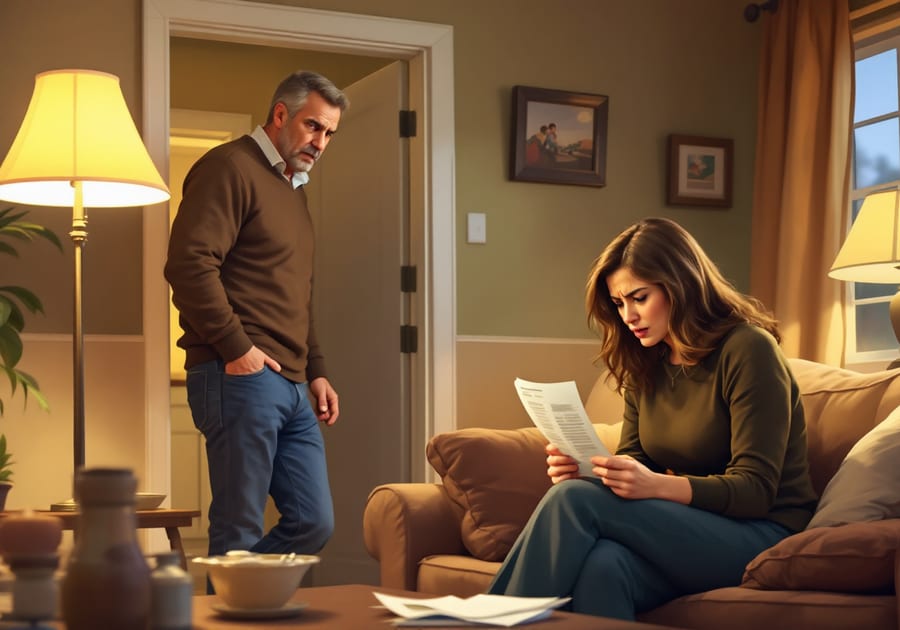
5. You say "I'm fine," and you both know it isn't true.
The kitchen cabinet closes a little harder than it needs to. When your partner asks about your day, you say "Fine." Dinner happens mostly in silence, with the TV doing the talking.
For a lot of people, "I'm fine" started early, in a home where saying you were upset didn't go well. It feels like keeping the peace. In practice, it hands your partner a puzzle and then gets mad at them for not solving it.
You don't have to unload everything at once. A smaller, truer sentence works fine: "I'm not okay, but I'm not ready to talk yet. I'll come find you after dinner."
Then actually go find them after dinner.
6. A good idea gets shot down before it's even finished.
Your partner starts, "What if this year we went to your sister's for Thanksgiving instead of..." and you're already shaking your head. The suggestion never makes it to the end of the sentence.
That same 1998 Gottman study flagged this, too. Refusing to accept a partner's influence was another pattern that predicted divorce among the newlyweds they followed. Accepting influence doesn't mean saying yes to everything, it means letting your partner's view actually change your mind some of the time.
Shooting ideas down fast often protects something, like your schedule or the way things have always been done. To your partner, though, it just feels like their opinion doesn't count.
Try a short pause before reacting. Literally say "Huh," and let them finish. Then find one piece you can agree with: "I don't love that drive, but you're right that we haven't seen her in a while."

7. Big talks happen at the worst possible hour.
A lot of couples have their most serious conversations at the least serious times. Ten minutes before guests arrive. In bed at 11:30 p.m., when one of you has an early meeting and the other has been rehearsing this speech since lunch.
Timing is part of the script. If the money fight always starts the day the bills show up, or the in-law fight always starts on the drive home from your mother's, that's a pattern you can plan around.
Pick a regular time for harder topics, when you're both fed and awake. Sunday afternoon with a pot of coffee is a decent default. When something comes up at a bad moment, park it out loud: "This matters to me and I want to do it right. Let's talk tomorrow after work."
8. Your parents' arguments show up in your kitchen.
You hear yourself say something in your father's exact tone, the one that used to send you to your room. Or you go icy and silent, just like your mother did when she was hurt.
Many of us got our first lessons in conflict from the first couple we ever watched. If yelling meant the house was falling apart, you may avoid any raised voice at all. If silence meant punishment, your partner's quiet hour in the garage might feel like abandonment, even when it's just a quiet hour in the garage.
Talk about this when you're not fighting. Swap stories over a glass of wine about how your parents argued, or how they didn't.
You might say, "When my mom got quiet, it meant she'd be angry for days. So when you go quiet, I panic." One conversation like that can explain years of overreactions on both sides.
9. Making up without changing anything resets the clock.
The fight ends. Someone apologizes, someone says "me too," you order a pizza, and everything feels better. Then three weeks later, the same argument plays out almost word for word.
Making up matters. But if every repair ends with "Let's just forget about it," the problem that started the fight is still sitting right where you left it. The mood got fixed while the problem stayed put.
Once you've both calmed down, add one practical step. Skip the big promise and pick something small and specific you can check on: "Next time I'm running late, I'll text before six instead of after."
Write it on the fridge calendar if you have to. When it works, say so out loud.
Catch one script this week
You don't have to fix all nine. Pick the one that made you wince a little while reading, because that's probably the one running in your house right now.
For the next week, your only job is to notice it. Don't announce it in the middle of a fight. ("Aha, you're withdrawing" has never calmed anyone down.) Just see it. Then, on a calm evening, tell your partner which script you caught yourself in. Your own, not theirs. Owning your half first usually makes it a lot easier for them to own theirs.